
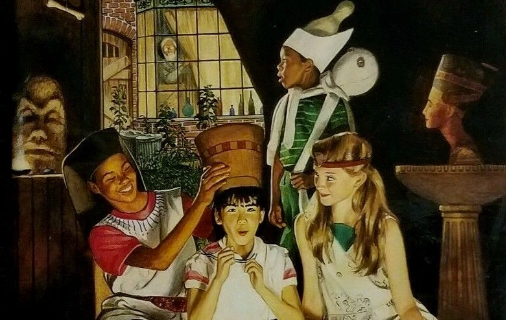
In Zilpha Keatley Snyder’s The Egypt Game (1967), a group of children transforms a hidden yard into an improvised sacred world inspired by ancient Egypt. They invent names, costumes, gods, ceremonies, initiations, sacrifices, funerary rites and an oracle, gradually developing a shared mythology that feels consequential without requiring literal belief.
As an example of cultpunk or poetic faith, the Egypt Game shows religion emerging through collaborative imagination, handmade objects, ritual performance and sustained play: fiction is not merely represented but temporarily inhabited as a meaningful social reality.