
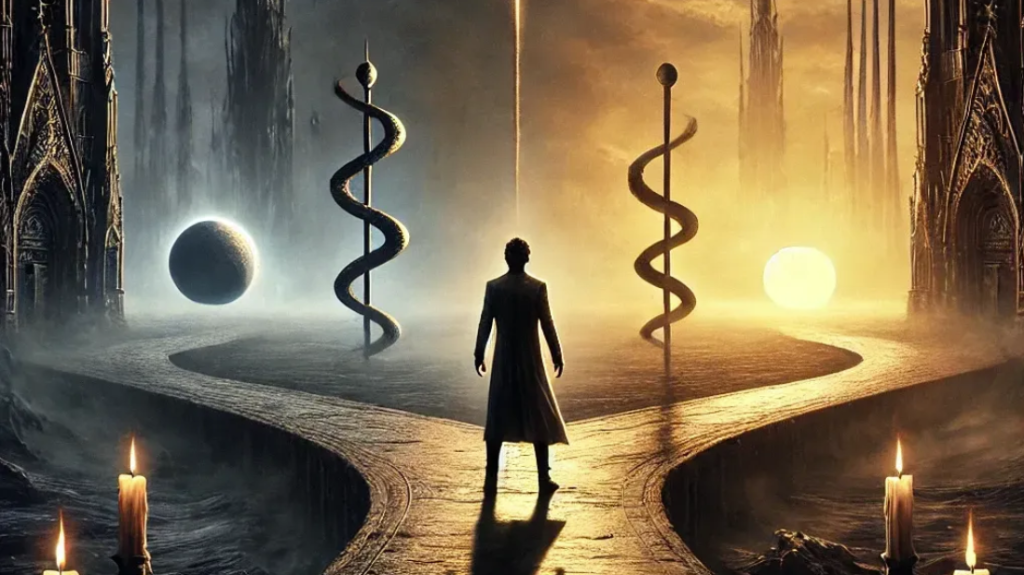
Stephen Bradford Long reflects on his time in the Satanic Temple:
I didn’t have to work to see Satan as a hero. I didn’t have to contort my mind to see him — and the attendant iconography, dark though it may be — as beautiful and inspiring. Contrary to popular belief, I didn’t become a Satanist because I was mad at Christianity or wanted to offend Christians. I joined because it made me feel at home and I found it beautiful. It fit like a well-worn glove.
I have now taken that glove off. I no longer consciously think of myself as a Satanist. But my hand — my mind — is still the same shape as it was before. I still have the propensity to be immune to certain taboos, I still have a low disgust response, and things still arrive inverted, just as Satan arrived inverted. I don’t have to work for that to be the case. It just happens. I have always been enthralled by the weird and beautiful, be it horror movies or goth aesthetic.
After a year of thinking about this, I have come to believe that, at a certain level, Satanism is less about Satan and more about being part of a particular tribe of people who have similar brains. The ability to effortlessly see Satan as a hero instead of a villain is the key that unlocks access to a club of other weird people. Satanism provides a social filter for people with fun-house mirror minds to find each other. We don’t just idolize the same symbol. We think similarly in a way that makes us feel uncomfortable everywhere else. Satanism is, in other words, a religious neurotribe.