
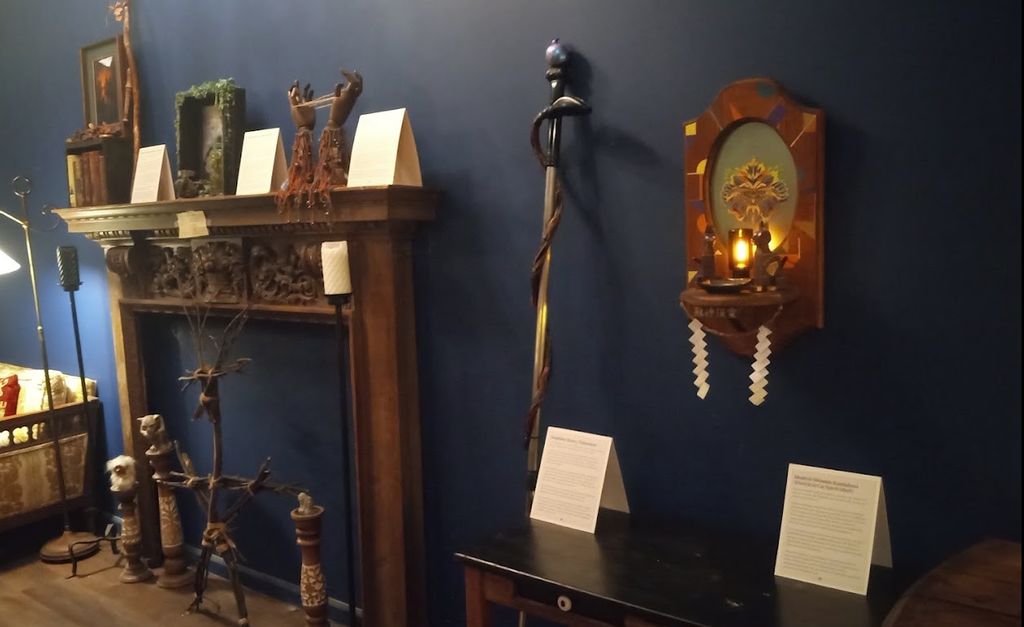
The evening of Nov. 11th, 2026 saw the inaugural gallery exhibition and book launch of Make Believe: The Material Culture of Imaginal Religions. The event took place at the Cobblestone Society, a new arts and community space attached to the Malliway Bros. magic and witchcraft store in Chicago’s Rogers Park neighborhood.
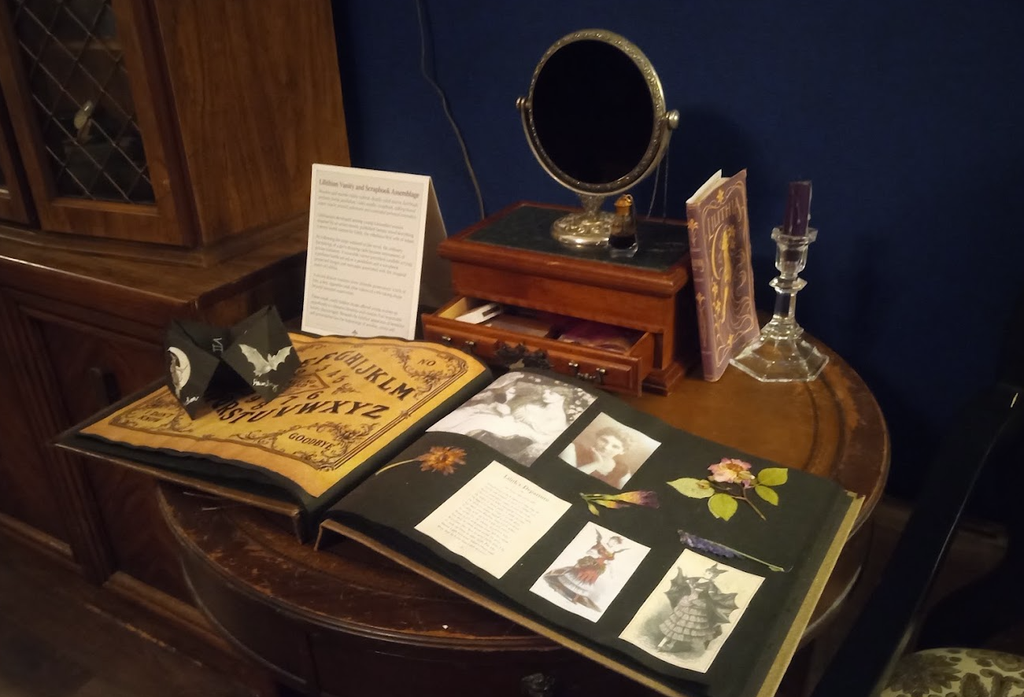
Above: the Lilithianism assemblage, representing a clandestine, proto-feminist self-initiatory tradition inspired by the anonymous novel Lilithia (c. 1900). By following the instructions written in the story, young teenage girls could imaginally enter the darkly colorful realm of Lilithia. The typical accoutrements of a middle-class girl’s vanity dresser – a mirror, perfume bottle, scrapbook, folding paper oracle, etc. – became tools for accessing new and decidedly unauthorized versions of femininity.
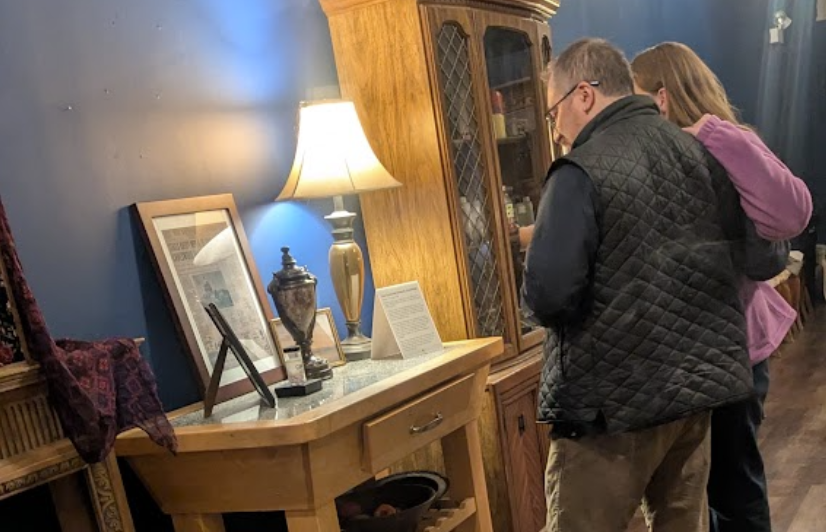
Gallery visitors examine the Cavesway assemblage, inspired by the nontheistic, radically death-positive American religion created by Gore Vidal for his 1954 novel Messiah.
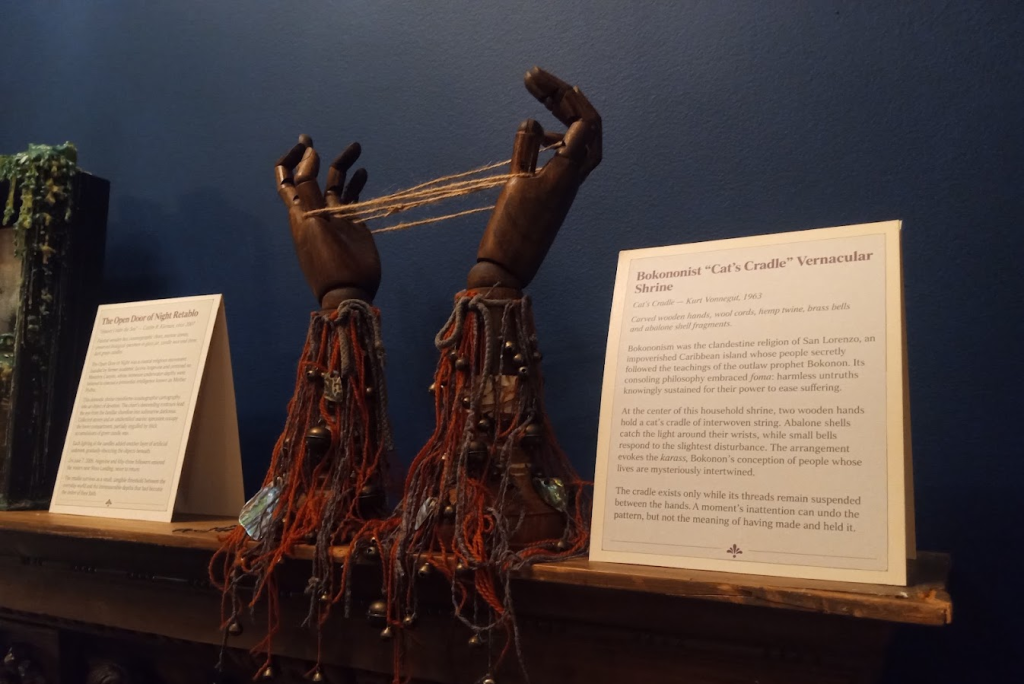
The Bokononist shrine, inspired by Kurt Vonnegut’s 1963 novel Cat’s Cradle. Bokononism – the folk-religion of the outlaw prophet Bokonon, practiced throughout the impoverished Caribbean island of San Lorenzo – promoted the idea of foma, or harmless lies knowingly held because they ease suffering.
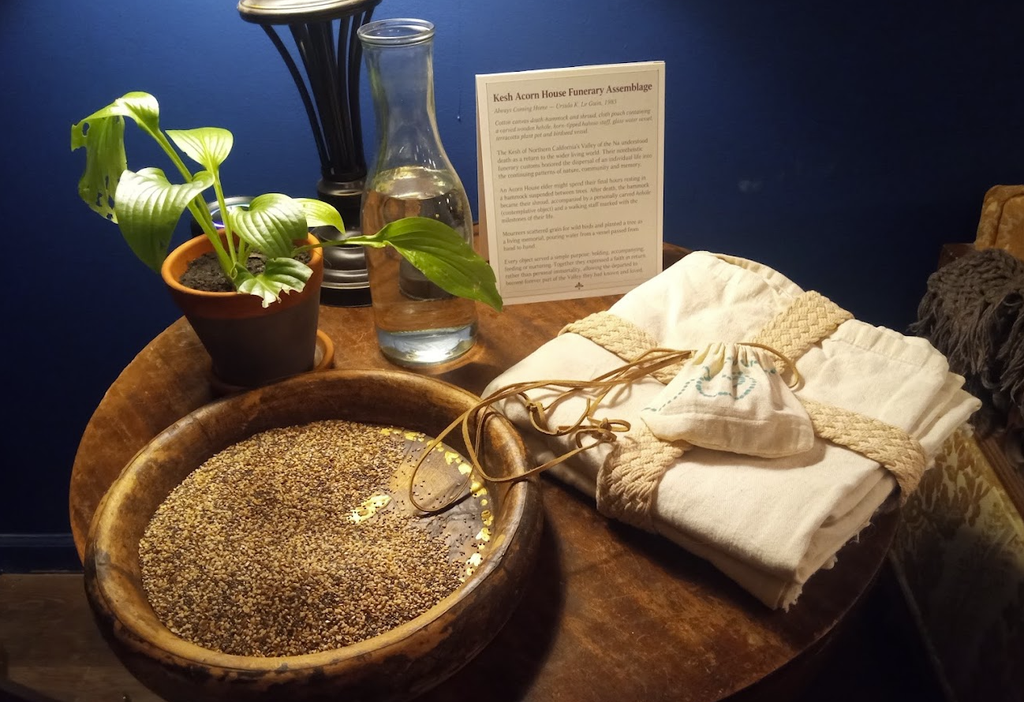
A Kesh funerary assemblage, inspired by Ursula K. LeGuin’s 1985 novel Always Coming Home. The far-future Californian Kesh reside in the Valley of the Na – equivalent to the present-day Napa Valley – and their funeral rites of the Acorn House include spending one’s final hours lying in a hammock suspended between trees. After death, the hammock becomes the funeral shroud. Birdseed is scattered for wild birds, symbolically carrying the decedents’ soul throughout the land; a tree is planted upon the grave, and water poured from a communal vessel.
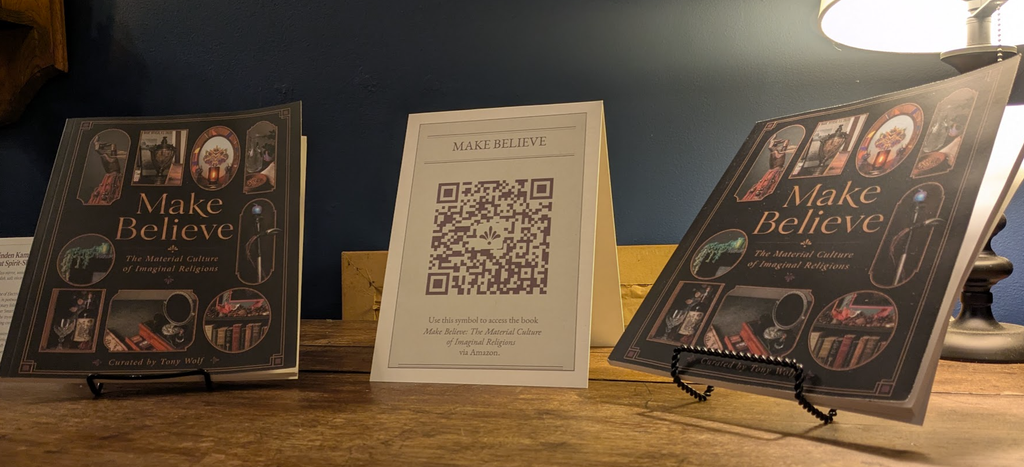
Sample copies of the book Make Believe, which includes the histories, philosophies and ethnographies of the nine imaginal religions featured in the collection.