
I first came across this poetic essay by the controversial anarchist philosopher Peter Lamborn Wilson – more widely known as Hakim Bey, author of the TAZ theory among many other provocative ideas – sometime in the early ’90s. I lost track of it over the years and only recently rediscovered the text, which (faint bell) was originally published in the anthology Choirs of the God, Revisioning Masculinity (1991).
Here follows a translation of the essay from Polish, which is the only electronic version of the text I’ve been able to find.
In contemporary men’s emancipation movements there appears a longing for a kind of spirituality that would differ from the patriarchalism of Babylonian-type civilization. This paradigm is supported by the thesis of the alleged existence of a primal matriarchy. And indeed, paleopsychology presents solid evidence confirming its validity. For example, Tiamat, the monster of Chaos destroyed by the male god Marduk, possessed distinctly feminine traits. Anthropology, in turn, presents pre-Babylonian hunter-gatherer communities as existing under the clear dominance of the feminine, watery, shadowy principle.
In such a vision, critical of contemporary patriarchal society, prehistory, history, and post-history are perceived as a kind of pendulum ticking between matriarchy and patriarchy. The primal matriarchy described by some authors arouses suspicion, because it seems like a parodic inversion of the patriarchal lie that said the world “began” when the repulsive Tiamat was destroyed.
I recently read an article in which someone was discovering the banal anthropological truth that one can always find some tribe whose moral code conflicts with the moral codes of other tribes. What is “sin” for some may be “virtue” for others. The author of that article proposed using cultural relativism as theoretical support for the new sexual moralities emerging in our society. But immediately afterward he warned that some of these tribes possess “virtues” that could be considered repulsive, even within the decent sort of cultural relativism proper to liberals. In this context he cited, I think, male chauvinism, rather than cannibalism or headhunting — probably out of delicacy. In any case, the author missed the heart of the matter. Morality is not determined by some genetic/memetic code, although that is precisely how it seems to every isolated tribe, including our own. On the contrary, we can imagine every morality, and therefore none at all. Nietzsche called this moment the death of God. Nevertheless, in the late notes in The Will to Power, he saw in it the resurrection of Dionysus.
The arrogant macho-Martian Babylonian/patriarchal terror at the very foundation of civilization has proven, in essence, empty. That old, worn-out corpse sways and nods upon a throne dripping with fat. Today many people, regardless of sex, desire a strong antidote in the form of the spirit of femininity. Let me use myself as an example here. I worship the Hindu goddess Tara and the sea-and-moon goddess of the New World, Yemaya, who enjoys great popularity in New York. Yet I am an anarchist, and so I do not much like the word matriarchy. Words ending in -archy make me want to reach — metaphorically, of course — for little black bombs to blow up all linguistic systems of control and grammars of enslavement. I do not think I would feel any better under the rule of Queen Mommy than under the dominion of King Daddy.
A far better emblem for the flag of the utopia being born in the cracks and fissures of the Babylonian monolith of “empty discourse” is the archetype of the Androgyne. Hermes/Aphrodite — that is the proper sign of Tao. Let me also note that a certain occult logic suggests that after the Age of the Mother — Tiamat, the Old Stone Age — and the Age of the Father — Marduk, the New Stone Age down to the present — there may come not so much the return of the Mother as the Age of the Child.
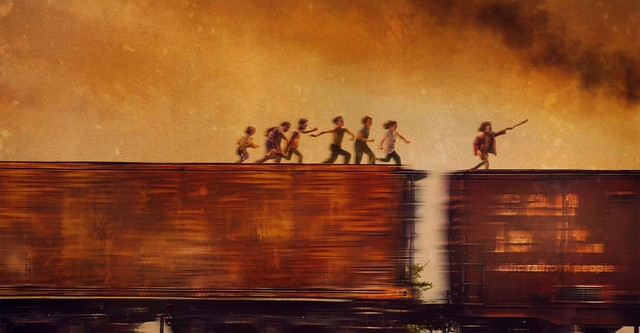
To some extent, the Child symbolizes the structure of hunter-gatherer communities better than the Mother does. The few surviving tribes are usually treated like children who must be punished and civilized — “adultified.” Their non-authoritarian political structures resemble the structures of spontaneous children’s gangs that develop among children all over the world. Such gangs are perceived in our world as “juvenile delinquents,” but in hunter-gatherer communities children often have their own lodges, forming gangs within the larger tribal gangs. The Plains Indians of North America developed very sophisticated versions of the “children’s gang” social model, in which boldness, vision, and adventure were considered the highest values. This was a model of “democratic” shamanism. Leaders emerged spontaneously depending on the situation. Children’s gangs have a certain tendency toward sexual division: girls and boys often have separate lodges and “initiations.” This division, however, reflects the ambiguity of sex more than a war between the sexes. Groups of men and women move through a magical world of cultural homoeroticism. When they appear in Babylonian-type civilization, they are labeled agents of chaos, wolf-packs, Männerbünde, sorcerers, witches, gypsies, vagabonds, criminals, marginal people, perverts. The Child appears as the demonic Other, immortalized in countless nightmares, or else as the archetypal victim of satanic crimes — in either case, as alien.
By some miraculous coincidence, while writing this essay I came across an article about a children’s gang that illustrates my thesis splendidly. I found the description of this gang in a book on Melanesian cargo cults — P. Worsley, The Trumpet Shall Sound, New York, 1968 — and it came from the memoirs of the British colonial official A. B. Brewster, The Hill Tribes of Fiji, London, 1922.
I mean the Water Children — Luve-ni-wai, Children of the Water. This was not an ordinary cargo cult, nor a traditional tribal youth group of the sort described by Malinowski or Mead. Although the cult was based on tribal myth, it had in fact arisen quite recently. It appeared in the 1880s and 1890s as part of a “pagan revival” opposing the growing influence of Methodist missionaries.
Brewster writes that the movement was inspired by “magicians,” vu-ni-nduva, who astonished their followers with typical magical tricks. Modern anthropology agrees that shamans’ use of “magic tricks” does not constitute evidence of their hypocrisy. A healer may “deceive” a patient during treatment while still believing in spirits, planes of existence, and similar matters from shamanic cosmology.
This colonial observer tells us that although the Luve-ni-wai used occult signs and performed “strange rites,” they were initially regarded as “a kind of youth republic,” or “a form of youthful amusement.” The name of the cult came from fairy-like “fauns” said to inhabit the forests and waters: little boys with long hair in the traditional style, “and very handsome besides.” According to the stories, boys met these friendly spirits in the forests and learned songs and dances from them. At the meeting places they traced “fairy circles,” which they then cleared, decorated with flowers, and magically protected.
To join the movement, a boy had to receive a personal guardian from among these forest creatures. He prayed for this in the bush, offered kava, and waited until the spirit entered his body. He then took a new name, usually derived from the name of a flower.
Lesser totemic and tutelary spirits, such as fairies and water-nymphs, are represented as children, or in some way associated with children. And this has nothing to do with a decadent sentimentalization of figures that were “originally” terrible, chthonic, hairy, and uncanny. Raven, the trickster god of the Northwest Indians, appears both as a great bird with an erection and as a youth. The growing child is perceived as natura naturans — “Nature in its natural state” — as opposed to the non-developing adult, who is natura naturata, a “harmless” representative of culture. In anthropological jargon, one also says that the child is a threshold or transitional figure, on the border between human and animal, culture and chaos.
In the course of their development, the Water Children became associated with another, more mature, politicized, anti-colonial neopagan sect, Tuka. One may say that as early as 1884 the movement got out of control in Serei, the largest village in eastern Tholo. One official encountered all the youths and boys gathered in the temple, surrounded by shamans. During the resistance, forty-four of them were arrested, including their leader Pita, sent to Vunindawa, and flogged. For more than six years no one heard of Luve-ni-wai in that region. Then, in 1890, the local government representative went away somewhere for eight months — long enough, upon his return, to find the Luve-ni-wai and Tuka movements newly “flourishing.” Many young people were interrogated and sentenced to three months’ hard labor.
Brewster regarded these early phases of the movement as quite innocent. He wrote: “…in my opinion it was not at all a seditious movement. It made the boys bold and insubordinate, and sometimes they went so far as theft. I do not think there was anything harmful in it, so long as its participants renounced theft and respected their elders. There is, however, a little poetry and romance in it.”
After suppressing the Luve-ni-wai, Brewster tried to divert the boys’ minds from trouble by popularizing among them… the game of cricket. And he miscalculated. His cricket clubs became secret fronts for the Water Children, developing cells of anti-colonial struggle, and within a few years their leaders were in prison.

If an anthropologist happened to wander through American shopping malls, discovered a band of kids in almost ritual dress, and gained their trust, conversation with them would reveal the same ancient themes as in the history of the Luve-ni-wai: the “republic of children,” the use of intoxicants, the quest for visions, the search for identity and ritual self-naming, “poetry and adventure” — the aesthetics of spontaneity — rebellion against adult authority, both the “elders” of the immediate clan and distant power; dance, music, and even possession and occultism.
I would prefer, however, that the anthropologist not publish those discoveries. For every secret brought into the light and revealed in the media becomes its own spectacle and is distorted. The delicate and subtle flower of our image of the free spirit of youth suddenly becomes “Youth Culture,” surrounded by reports and news about “Troubled Youth,” with sociological data and sensational photographs. Under the fire of such gazes, as Foucault observed, every phenomenon thus examined somehow mysteriously vanishes.
Nevertheless, children’s life has not disappeared, but has merely “been disappeared,” to use the apt phrase of Latin American politicians. It has been buried beneath the empty image of children’s life, an image that fulfills all the positive and negative expectations of institutions interested in social consensus. But children’s life is something organic and cannot be suppressed by culture. Perhaps it has become an invisible empire of the senses. […] Yet if it eludes all tests, votes, studies, and analyses, how can we be certain that it exists at all?
Perhaps children’s life belongs among those things that are not discussed in polite company […]. It is found in liminal places, on the edges of the city, where proliferating forest shrubs blur the border between residential zone and wilderness, or else in bed, between waking and sleep. It exists even in the subjective experience of mediated images, which can undergo certain radical reinterpretations, which can be absorbed into complexes of meaning not planned by their creators, which are no longer passively consumed but actively transformed in imagination, in spontaneous ritual, in vision.
Writing about this misses the truth. It must not be betrayed — but it cannot be betrayed, because every attempt to reveal it is doomed to failure. It is latif — in Arabic, “something subtle,” as in alchemy. In fact, contemporary occultists contemplate the emergence of the “current” of the Child, which is sometimes called Horus. Neoteny — a scientific concept denoting species that possess no “mature” form — applies both to the axolotl, which regrows its lost tail, and to human beings, who are able to transcend their genetic and social “destiny” through the regenerative capacity of imagination.
The wandering dervish never “grows up.” He spends his time in “constant celebration” — Nur Ali Shah Esfahani — like “a gypsy or a beggar” — Fakhroddin Iraqi. Unlike orthodox Sufis, the dervish — qalandar, maulang — rejects the duties of adult life, experiencing them as obstacles on the path of spiritual development. He belongs to the radical aristocracy of the unemployed, like hobos in railroad-era America. Moving from town to town, sometimes observing the rule of not visiting the same place twice — or not staying in one place longer than forty days — the dervishes anticipated modern urban nomadism, especially the consciously poetic “drift” of the Situationists, the dérive. In truth, they revealed to us the spirituality of urban nomadism.
Let us perhaps use a particular concept supplied to us by the science of symbolism, which is able to connect everything with everything, and allow ourselves a few associations: from the Sufis to the Assassins, from the Assassins to the Templars; then to Baphomet, perhaps even Klossowski’s Baphomet, the Moor’s head serving spontaneous rituals of mystical pederasty; and then to William Burroughs and the Wild Boys.
All single-sex utopias in science fiction are spoiled by resentment toward the opposite sex. On the other hand, these tales release a certain beneficial power — mana, baraka — in the image of one’s own sex. As for men, I am thinking here of Samuel Delany, and of Storm Constantine’s Wraeththu trilogy — although Constantine is a woman. In the case of women, I am thinking of Angela Carter, Leonora Carrington; Rachel Pollack’s story “Burning Sky” presents Wild Women, a feminist version of Burroughs’s popular myth — the myth of shape-shifting erotic youth, werewolves, a jaguar society.
This whole cluster of themes can be summarized under one heading: the aesthetics of chaos, the aesthetics of Tiamat, different from the ordinary aesthetics of the splendor of Order ruling civilization, the aesthetics of Marduk. Let us remember, however, that we have gone beyond the male-female dualism that returns in the many obsessions of respected feminist commentators on history/herstory. We have entered under the sign of the Child, which somehow eludes sex, as if our children belonged to a third sex — as H. de Montherlant argued. There are gangs of boys and gangs of girls, as well as mixed gangs, but all are in a certain sense androgynous.
Children’s gangs disappear. They do not confront “adult authority,” but simply avoid adulthood. Amazonian Indians shooting at helicopters simply want to remain invisible. Groups of youths, groups of half-breeds, heretical communities, gypsies, freedmen, hippies — all these “children’s gangs” vanish from before the face of police terror and the rigidity of Marduk. As pirates they prey upon society; as monks they pray for society; but in either case they avoid its burdensome banality, including the obligation of the sacrament of sex. Such disappearance, as Baudrillard says in Fatal Strategies, is itself a kind of uprising. In the face of the empty discourse of power, the simulacrum that Babylon has become, this invisible counter-power possessed by marginal types may prove tactically vital. It may assume the role of the vajra weapon, or of aikido, in which one “wins” by avoiding power.
The children’s gang also renounces mediation. It wants its own dream. Above all, it wants its everyday life to be permeated with the marvelous — in the Dadaist, Surrealist, or Sufi sense of the word. The marvelous means presence, and therefore cannot be represented. The knights of King Arthur, that boys’ gang, centered its existence on the single virtue of adventure. They regarded as marvelous whatever happened to them. For one can truly live only when one disappears from before the deadly gaze of Babylon, the monotony of Order.
It is said — especially in our Civilization of security — that this is a dangerous idea. That is true. That is precisely what adventure consists in. Order always has something to say. So perhaps we too should speak of a beautiful idea, paradoxically very traditional: the idea of the spirituality of divine disorder, perhaps of the rebirth of Dionysus.
The children’s gang can degenerate into a “fascist” spirituality, but it can also make visible something that may be called anarchist spirituality: radically monistic, on the side of wildness — and therefore “green” — erotic, spontaneous, playful, and thus artistic. This art tends toward totemism and the rediscovery of the Paleolithic psyche. It is a disease of civilization, yet at the same time immune to sickness through contemplation of the symbol of its own energy. Its energy moves in space rather than in time: it is not bound by history. It is “always young.”
The rediscovery of the Goddess and the New Men’s Spirituality provides solid ground for the emergence of a complex from which human paths move toward “liberation.” Nevertheless, for some, the god/goddess structure is too heavy; it contains too much Oedipal suffering, too many representations of the nuclear family and its partial dissatisfactions. They must transcend the spirituality of Father and Mother, and even “negate” it like some wild boy. I am not speaking here of the image of the New Man or the New Woman, but of the Child — the child standing on the giant, at the beginning of the great adventure.