
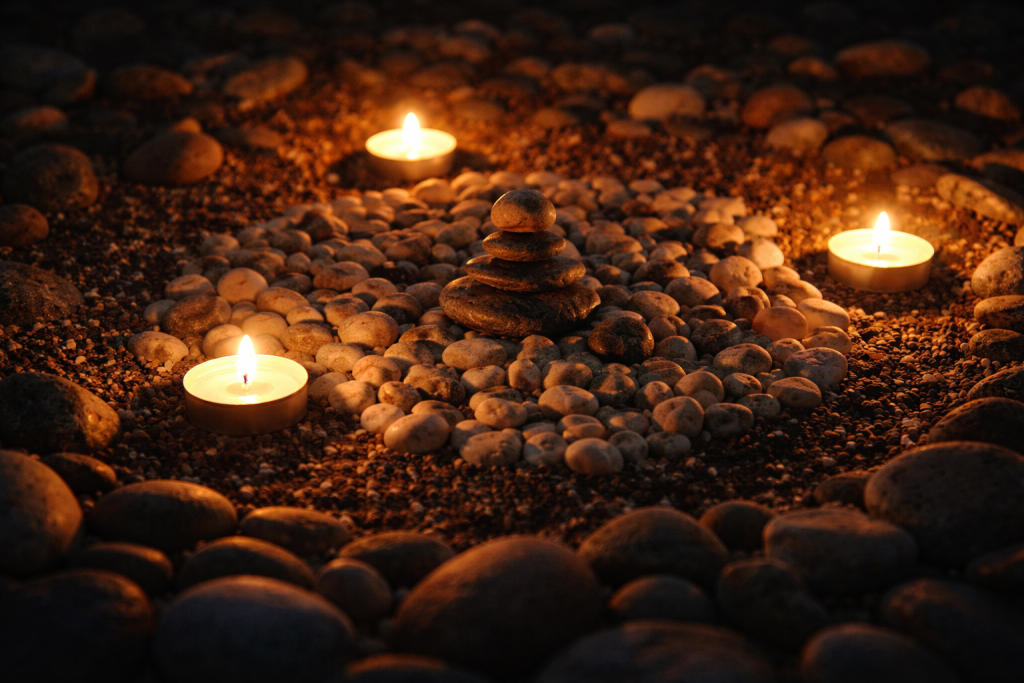
Mythopoetic ritual bypasses much of the intellect and engages the subjective senses, bodily movement, imagination and emotion. It shrugs – subversively, mightily – at color-coded spread-sheets. Ritual speaks in the immersive repetition of gesture, ullulation, mystic symbol and profuse sweat. It is profound meaning-making undertaken in a self-aware spirit of Deep Play.
The role of ritual as a source of psychological comfort in the face of uncertainty and mortality is well established, but there is another, equally important function. Ritual is also a practical means of symbolically acknowledging and reinforcing core values. Acting as if, on a conscious suspension-of-disbelief basis, becomes meaningful precisely because the symbolism of ritual stands for realities, forces or abstractions that the practitioner genuinely takes seriously. This function becomes especially urgent and salient when those values diverge sharply from the prevailing norms of the surrounding culture.
I, for example, do not believe in a supernatural afterlife. We each have one life, and if we are fortunate, it is of reasonable length and largely good. After that, it ends like a candle being blown out. Science, as I understand it, supports this view more convincingly than doctrines of heavenly reward or reincarnation.
From that premise, certain values follow naturally. Time and attention are precious. The best use of them is to live as well, meaningfully and joyfully as we can, while we can; to live in such a way as to be well-remembered for a while after we are gone.
My personal method and style of mythopoetic ritualism is founded on those values, which fly in the face – not only of most religious orthodoxies – but also of a secular culture that has been largely captured and dominated by market forces. It serves as a corrective to the dominant values of the fast-paced, high-tech, competitive, materialistic and arguably narcissistic/nihilistic culture of the contemporary mainstream. It employs symbolism, aesthetics, narratives and forms that most people would intuitively recognize as “religious,” without any belief in the literally supernatural.
Practiced as Deep Play, ritual is comforting, but it is also more than comfort. It is a way of repeatedly enacting and reaffirming my deepest, most countercultural convictions about how the world is and how it ought to be.